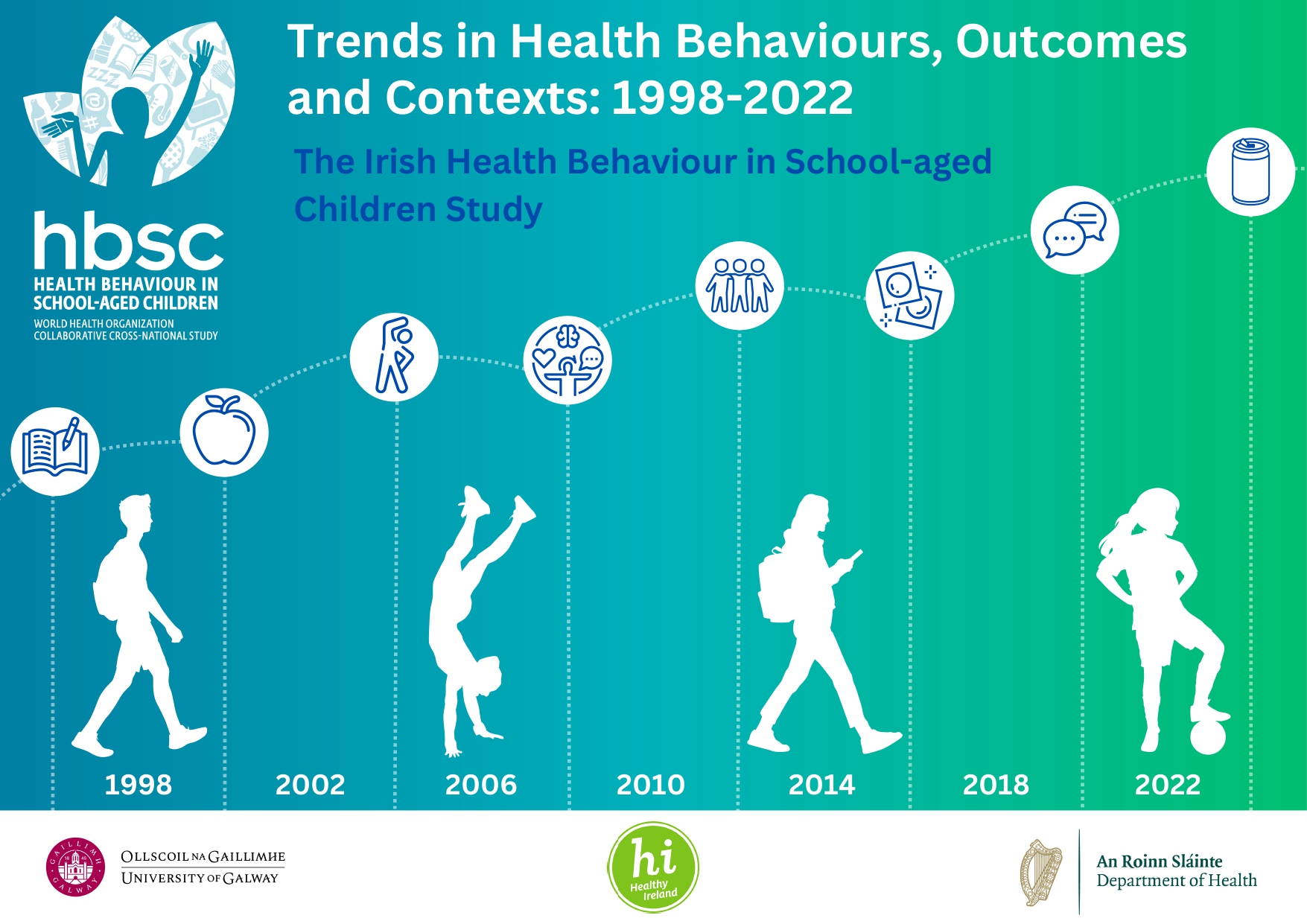
The newly released HBSC Ireland Trends Report marks a milestone in adolescent health research, presenting a detailed picture of how the health and wellbeing of school-aged children in Ireland have evolved between 1998 and 2022. Drawing on the responses of thousands of young people in Ireland, the study highlights both encouraging trends and persistent challenges, offering important lessons for policymakers, educators, and families across the country and beyond.
Decline in risky health behaviours
One of the most striking findings from the report is the marked decline in a range of risky behaviours among adolescents in Ireland. Over the past 25 years, the proportion of 15-year-olds who have ever smoked cigarettes has plummeted from nearly three-fifths in 1998 to just over one in ten in 2022. Alcohol consumption has followed a similar downward trajectory, with the proportion of 15-year-olds who report ever having been drunk falling from more than half in 1998 to less than a quarter in 2022. Cannabis use among this age group has also been halved since the late 1990s. These long-term declines reflect sustained public health efforts, legislative changes, and cultural shifts regarding tobacco, alcohol, and drugs. They place Ireland among the leading countries in Europe in terms of reductions in adolescent substance use.
Mental health concerns on the rise
Despite these successes, the report draws attention to a growing mental health challenge. The proportion of young people who report feeling low or struggling with their mood has more than doubled since 1998. Nearly half of children and teenagers in Ireland now say they experience low mood, and this increase is particularly pronounced among older adolescents and girls. Among 15-year-olds, the percentage reporting feeling low at least once a week has risen sharply over the 25-year study period. The widening gender gap in reported emotional difficulties highlights the need for more tailored approaches to supporting girls’ mental health. The findings also underscore the growing importance of mental health support in schools and communities, especially as academic and social pressures have changed for today’s youth.
Progress and persistent challenges in diet and physical activity
The HBSC Ireland Trends Report reveals a nuanced picture of young people’s diets and activity levels. More students are eating breakfast on school days compared to a decade ago, but the figure remains just above half. There has also been a modest increase in the proportion of young people who eat fruit every day, although daily fruit consumption is still relatively low. When it comes to physical activity, there has been some progress, but only a small minority of school-aged children are meeting the recommended guideline of at least one hour of moderate-to-vigorous activity each day. Boys continue to be more active than girls, and children from more advantaged backgrounds are more likely to be physically active and eat a healthier diet, highlighting the influence of socioeconomic factors on health behaviours.
Bullying and social relationships
School bullying trends are mixed. Reports of being bullied at school once or more in the past couple of months increased slightly overall between 1998 and 2022, from 24.6 per cent to 28.6 per cent. Over the same period, reports of bullying others at school declined from 25.1 per cent to 12.8 per cent.
In the wider social context, communication with parents improved, while perceived support declined slightly. More children now find it easy to talk to their mother and father, yet fewer report high family support. Peer support also declined modestly, even as young people reported finding it easier to talk to friends. Time spent out with friends fell.
Persistent inequalities in health and wellbeing
Socioeconomic inequalities remain a key issue in the health and well-being of adolescents in Ireland. The report shows that children from less affluent families are more likely to experience poorer health outcomes, such as lower physical activity, less healthy diets, and higher levels of emotional difficulties. These disparities emphasise the need for policies and programmes that are responsive to the needs of the most vulnerable, ensuring that improvements in adolescent health are shared by all groups across society.
Youth voice at the heart of the report launch
A highlight of the report launch was the active involvement of young people themselves. Youth representatives Anna Adler and Padraic Barry from Foróige, a national youth development organisation, addressed attendees and shared their perspectives on the findings. Their participation reflects the HBSC study’s commitment to ensuring young people’s voices are central in both research and policy dialogue, and signals the growing recognition of the value of youth engagement in shaping responses to health challenges.
Media attention and interactive resources
The findings from the HBSC Ireland Trends Report have received significant coverage in the Irish media, with stories featured on RTÉ News, The Irish Times, the Irish Independent, Irish Examiner and The Journal. Four new interactive data visuals are available via the HBSC Ireland website, allowing users to explore trends by gender, age group, and social class. These resources support a deeper understanding of the evolving health landscape for young people in Ireland and are intended to inform national policy as well as international comparisons.
Looking ahead
The HBSC Ireland Trends Report provides robust evidence to guide future action on adolescent health, supporting ongoing collaboration between researchers, policymakers, practitioners, and young people. The continued decline in substance use and bullying demonstrates the impact of effective policy and prevention, while the rising mental health challenges and persistent inequalities signal where greater attention is needed in the coming years.