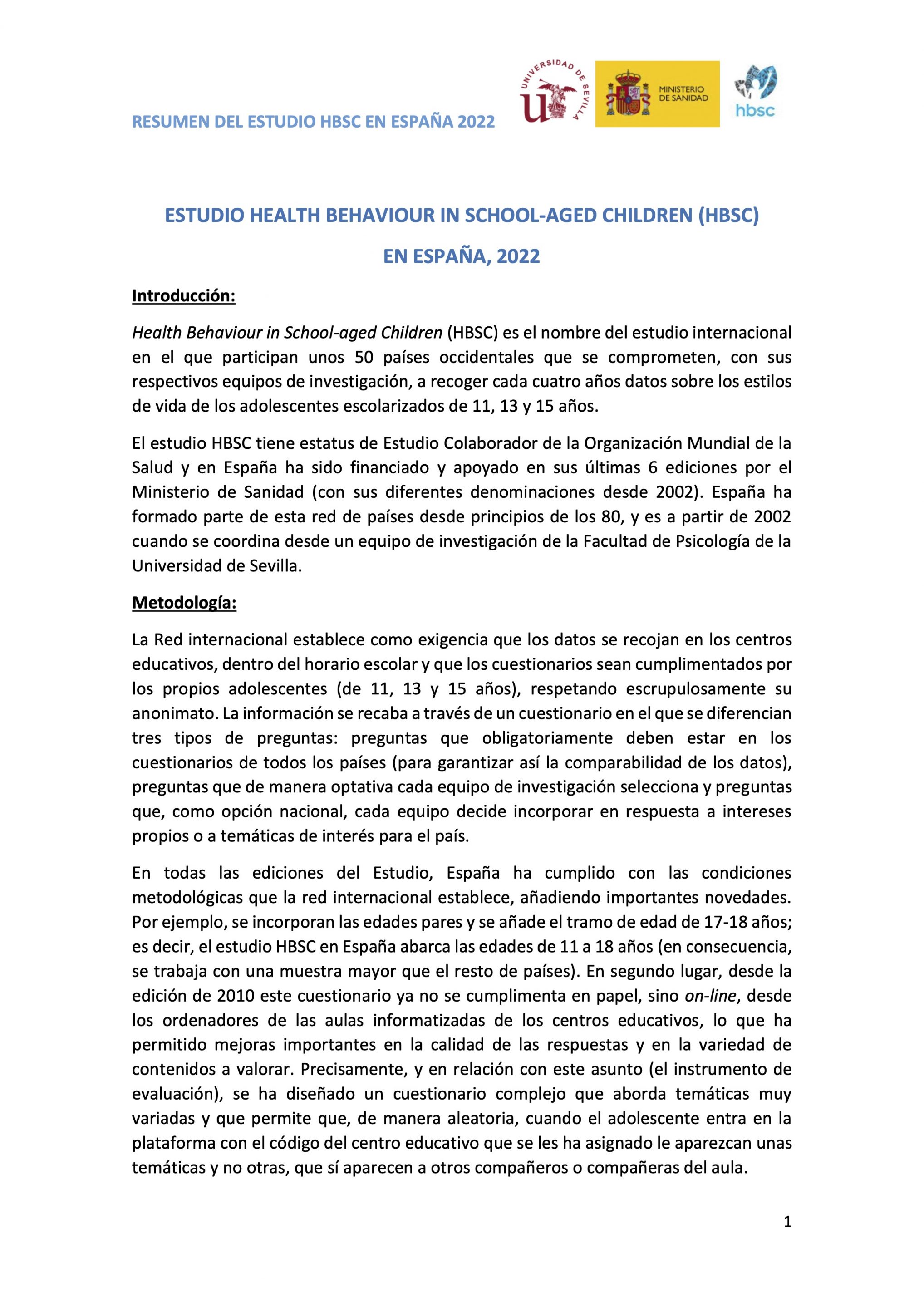
Findings from the latest HBSC survey in Spain offer a detailed look at how adolescents’ lives, health, and well-being have evolved. In 2022, more than 33,000 students aged 11 to 18 across Spain took part in the survey, making this the largest national sample to date. For a concise overview, you can read the summary of the results (Spanish).
Diet, nutrition, and physical activity
Healthy eating remains a significant challenge for many Spanish adolescents. Just over half report eating breakfast on weekdays, the lowest figure seen in the past 20 years. The number rises at weekends, but girls are consistently less likely than boys to have breakfast regularly.
Fruit and vegetable intake remains below recommended levels. Only 16 percent of young people eat fruit more than once a day, and just 23 percent have vegetables daily. Adolescents from more affluent families, as measured by the family affluence scale, report healthier eating habits overall.
You can find more detailed figures in the national tables report and regional tables report.
Physical activity also shows a worrying trend. Only one in four boys and just one in ten girls say they are physically active for at least an hour every day. These rates decline with age and are higher among those from more affluent backgrounds. Since 2014, the overall proportion of young people meeting activity recommendations has continued to decrease.
Body weight and body image
Nearly one in five adolescents in Spain is affected by overweight or obesity, with the problem more common among boys and among those from less affluent families. Girls are more likely to report dieting or feeling dissatisfied with their bodies, despite having lower rates of overweight than boys.
The proportion of young people reporting low satisfaction with their body image has increased sharply in the latest survey. This points to growing challenges around self-esteem and well-being, especially for girls.
Substance use and changing risk behaviours
Rates of alcohol, tobacco, and drug use among Spanish adolescents have generally declined or stabilised over the past two decades. The share of teenagers currently drinking alcohol is over ten points lower than in 2002. Daily smoking has dropped to just a third of its level at the start of the century.
Cannabis use is also much less common than in previous years. However, there are emerging risks: the use of waterpipes (cachimba) has increased, and episodes of drunkenness have risen slightly since 2018. Most adolescents still report no recent substance use, with nine out of ten saying they have not smoked or been drunk in the past month.
Sleep, dental hygiene, and injury
Sleep continues to be a concern. Fewer than half of 11- and 12-year-olds get enough sleep on school nights, and this falls to only about one in four among the oldest students. Girls consistently report less sleep than boys.
Dental hygiene is another area where differences appear. Nearly three-quarters of girls brush their teeth at least twice a day, compared to under 60 percent of boys. Adolescents from more affluent families are also more likely to have optimal dental habits.
About half of all adolescents reported needing medical attention for an injury in the past year. Boys are more likely than girls to experience injuries that require treatment.
Family, friends, and school relationships
Most young people in Spain still live in two-parent households, but this share has declined steadily over the past 20 years. Fewer adolescents report high levels of family support or easy communication at home compared to previous surveys.
Support from friends, classmates, and teachers has also declined. Just over half of young people now say they feel well supported by friends or teachers, a notable decrease from earlier years. These findings highlight wider changes in social relationships and support networks.
Mental health and well-being
Mental health and overall life satisfaction have seen some of the sharpest declines. Only 27 percent of Spanish adolescents now describe their health as excellent or very good, a significant drop from 36 percent in 2018.
Life satisfaction has also fallen sharply, with fewer than a third of adolescents saying they are highly satisfied with their lives. Reports of psychosomatic symptoms, such as headaches and stomach aches, have increased, with almost four in ten reporting these problems in 2022.
Environmental attitudes and civic engagement
This survey round included new questions on environmental awareness and civic attitudes. More than two-thirds of young people support stronger environmental protection laws, and about half watch the news on television at least once a week.
Looking ahead, around a quarter of adolescents expect to participate in volunteering or community projects as adults. These expectations are higher among girls and the youngest age groups.
The school context and wider environment
In addition to the main student survey, the Spanish HBSC team collected responses from over 240 schools. A dedicated report, Structural aspects and resources influencing health promotion and education activities in Spanish schools, explores how schools promote health and highlights the ongoing barriers they face.
Many schools have health education programmes on topics like healthy eating and bullying prevention. However, the impact of COVID-19 is still being felt, with increased requests for support from both students and families, and school staff reporting a continued rise in mental health concerns among young people.
Explore the data
Readers can explore key indicators and trends using HBSC Spain’s interactive data visualisations, which provide visual access to the latest national data.
Looking to the future
The HBSC study in Spain continues to track trends and provide evidence to guide public health policy and school health promotion. With emerging risks, growing inequalities, and new challenges for adolescent well-being, there is an urgent need for targeted action and continued research.
For further information, visit www.hbsc.es read the national report, summary of the results, or consult the full methodology report for details on the survey approach.
Read the full HBSC Spain national report (Spanish)